Feeds:
Posts
Comments

Archive for March, 2018


st-chad

Blessings on this Feast of Saint Chad, also called Ceadda, (died March 2, 672, Lichfield, Mercia, England).  He was a monastic founder, abbot, and first bishop of Lichfield, who is credited with the Christianization of the ancient English kingdom of Mercia.
With his brother St. Cedd, he was educated at the great abbey of Lindisfarne on Holy Island (off the coast of Northumbria) under its founder, Abbot St. Aidan, and later apparently studied with St. Egbert, a monk at the Irish monastery of Rathmelsigi. Cedd recalled Chad to England to assist in establishing the monastery of Laestingaeu (now Lastingham, North Yorkshire). Upon Cedd’s death in 664, Chad succeeded him to become the second abbot of Laestingaeu, and, probably late in the same year, at the request of King Oswiu (Oswy) of Northumbria, he was consecrated bishop of the Northumbrians (with his see at York).

An ecclesiastical dispute arose because St. Wilfrid had already been chosen bishop of York and had gone to Gaul for his consecration, a mix-up recorded in Venerable Bede’s Ecclesiastical History of the English People (considered to be the best source for Chad’s life). The issue remains confusing. When in 669 the new archbishop, St. Theodore of Canterbury, arrived in England, he charged Chad with improper ordination. On Wilfrid’s return in the same year, Chad resigned York and retired to Laestingaeu. Theodore, however, was so impressed with Chad’s humility that when the bishop of Mercia died he asked King Oswiu to appoint Chad as the bishop’s successor. The king approved, and Chad, having been reconsecrated by Theodore in 669, chose Lichfield, where he built a church and monastery, as the new seat of his diocese.

During the last three years of his life, Chad founded a monastery in Lindsey, on land given him by King Wulfhere of Mercia. In the same area Chad supposedly founded another monastery, at Barrow-upon-Humber. He is noted as having conducted his apostolate zealously, traveling much on foot. He died of plague, and numerous miracles were reported as having taken place at his tomb. His relics, originally in the Cathedral of Lichfield, were saved by faithful Roman Catholics during the destruction wrought by the Reformation and transferred to St. Chad’s Cathedral, Birmingham.
Read Full Post »


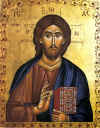
Christ2_small
Despite modern “fluidity” with truth, particularly among the political classes, how unnatural falsehood appears from the abhorrence with which it is properly regarded. The first lie was told by the devil, and we therefore instinctively hate a lie. It follows also from this fact that all liars are following his example, and must therefore share his fearful doom. The result of lying is, that no one will trust the liar. If others do not respect a man or woman, nor trust them what friendship can there be? Further, without friendship, what joy is there in life?

It has been said that he who utters a lie braves the displeasure of God, whom he ought to fear; while he is unwilling to incur the wrath of man, of whom he has no need to be afraid. Perhaps he hopes by means of his lie to gain something from man, who can do nothing that will be any really good to him without the blessing of God; while he deprives himself of all help from God, who alone can do him good.

Exaggeration is a form of untruthfulness which should be carefully guarded against. A little exaggeration may seem to give more point to a good story, so that it is often thoughtlessly indulged in; or our feeling towards another may so influence our words that we may, almost without intending it, speak more severely of him than the occasion requires, or than the circumstances warrant us in speaking. We shall not, however, regret it if we train ourselves to care less for triumph than for truth.

The Lord Jesus Christ died rather than fail in speaking the truth. His disciples are all of them soldiers of the truth. When St. Paul equips the Christian soldier he arms him fast with the girdle of truth. In like manner, St. John so dearly prized truth, that he wrote that he had no greater joy than to hear that his children were holding fast the truth of God, and that they were themselves truthful. God is a God of truth, and all His children must before all things be true.

Prayer

O God, help me, I beseech Thee, always to speak the truth, and if need be patiently to suffer for the truth’s sake, through Jesus Christ our Lord. Amen.

From Lent for Busy People © 2017 Fr. Charles H. Nalls

Read Full Post »


Pride
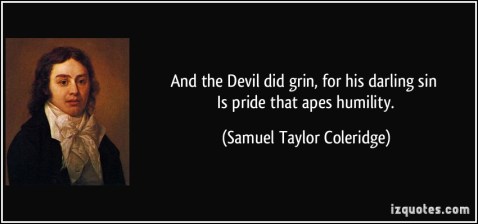
Pride is a very common fault. It is an exaggeration of the self-respect which we should all feel. But this making much of ourselves, and very little of others in comparison with ourselves, is an offense against God, for it involves the more or less complete dethronement of God from the place which He ought to hold in our hearts. Pride is the worship of ourselves, so that he who is proud is himself the object of his own worship; and as he worships and idolizes himself, so he expects others to worship and exalt him also.

It is an offense also against our fellows, for if it is the uppermost feeling in our hearts we shall certainly fail in charity and courtesy towards them. It is an offense also against ourselves, for pride, though it may urge us to do our best for our own glory, will render us incapable of those kindly, and generous, acts of unselfish love which really glorify those who can rise up to them; and that chiefly because they have never sought their own glory in performing them.

Moreover, St. Paul’s words (1 Tim. iii. 6) imply that the devil was lifted up through pride, and so fell into condemnation; and that therefore if we, like him, are lifted up with pride, we, like him, shall fall into condemnation also. Besides this, pride opens the door to other grievous sins, such as a foolish contempt for others, a disregard of their needs or happiness, an absurd habit of boasting, a fretful spirit of grumbling, and so on.
How may I overcome pride if I am inclined to it? By thinking of the beautiful humility of the Son of God. By thinking of the folly of pride, and by considering how little cause we any of us have for thinking anything of ourselves at all.

By observing the ill-effects of pride, which dwarfs our moral nature, and renders the proud continually unhappy when, as is often the case, they do not receive quite so much admiration as they think they deserve.

By prayer for God’s grace that I may not think of myself more highly than I ought to think.

Prayer

Grant me this grace, O God, and be merciful unto me, I beseech Thee, through Jesus Christ our Lord. Amen.

From Lent for Busy People © 2017 Fr. Charles H. Nalls

Read Full Post »

« Newer Posts