 It was not light yet when I set out this morning. The temperature stood at about 27 degrees at 6:45 am when I pulled on my watch cap and wind jacket. A snow storm was on the way and the sun seemed very far off when I hit the pavement on my prayer walk/jog. Somewhere out there some others were setting out in the same direction for the same purpose-sung Morning Prayer at Saint Alban’s during Advent. You see it is the custom of this parish to share the morining offices weekdays during penitential seasons, and this Advent we have begun to chant the first prayerbook service of the day.
I find myself hurrying to the church each day. It’s not because of the cold, although I’ll admit that mornings like today make for a faster pace. I hurry because there is something so very good about prayer said in community. In the quiet of the church up in choir, one can take a deep breath before the whirl of the day. In the warmth and darkness near the tabernacle His Presence is very close to His people and His people spiritually close to one another as the prayers begin. Even those who are just rising or who are already at the work of the day know that they are ro be prayed for, to be joined in this most ancient practice of the Church.
We know from the Acts of the Apostles that from the very beginning those who were baptized “devoted themselves to the teaching of the apostles and to the community, to the breaking of the bread, and to
prayer.” Christ personally teaches the lesson of his own prayer throughout the Gospels. For example,
when his mission is revealed by the Father; before he calls the apostles; when he blesses God at the multiplication of the loaves; when he is transfigured on the mountain; when he heals the deaf-mute; when he raises Lazarus; before he asks for Peter’s confession of faith; when he teaches the disciples how to pray; when the disciples return from their mission; when he blesses the little children; when he prays for Peter.The prayers of Christ were closely bound up with the work of each day.
Indeed, we hear that he would retire into the desert or into the hills to pray, rise very early or spend the night up to the fourth watch in prayer to God. Our Lord’s prayers were both public and private, and ranged from the traditional blessings of God at meals, as was the case in the multiplication of the loaves which foretold the last supper and the meal at Emmaus. In the agony in Gethsemane and on the Cross, prayer was at the center of Christ’s ministry and precious death. “In the days of his life on earth he offered up prayers and entreaties with loud cries and tears to the one who could deliver him from death and because of his reverence his prayer was heard.”
Christ-like prayer seems to elude us more and more The pace of modem life is a tremendous force that impacts on basic understandings of self, family, work, faith, and religious practice. There is a growing divorce between the life of faith and life “in the world.” Indeed, such is the pace of life that people need to be reminded to do what ought to come naturally, that is, to “take time” for themselves, for God, and for family and friends. Our daily offices and their attention to the consecration of time is one way to counter this prevailing trend and to restore a sense of balance to daily life. By consecrating time to God, the human person acts as a subject, cooperating with God in the unfolding of redeemed time, rather than being reduced to a mere object, suffering under the burden of a lived time that seems to go nowhere.
Being swept away by the rush of time will inevitably lead to dissatisfaction, alienation, and loneliness. Christians need not resign themselves to becoming so swept away, however. The integration of prayer into one’s daily schedule is key. Without this integration, the Christian risks losing a sense of identity in God and the realization of one’s need to be drawn into life-giving relationships with others. Consecrating the moments of one’s day means turning the day over to the transforming power of the Resurrection. The vehicle of the daily offices prompts the believer to encounter God in the concrete moment so that the love of God in Christ becomes the cord that holds the day together. “Do time or time will do you,” is the wisdom which speaks eloquently of the situation of the modem world.
And so this Advent we are paying special attention to the consecration of the day to Christ in daily prayer, beginning each of those days with the “voice of the Church”, the canticles and collects, the affirmation of faith, and the offering of our petitions and thanksgivings. This is reason to run hurry to Church even in the dark and cold of the year’s shortest days-to claim those days for our Incarnate Christ from their very first hours.
Read Full Post »
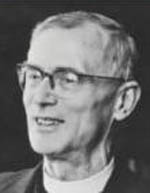
 Here is a thought for the day from Bishop Charles C. Grafton, an icon of Anglo-Catholicism.
 The Cathedral Close