The Diocese has scheduled a Lenten Day of Witness for Saturday, March 26, 2011, at St. Alban’s Pro-Cathedral, Richmond Virginia. The event will begin at 10:15 AM with Morning Prayer and Holy Eucharist celebrated by the Bishop. Following the Eucharist, there will be a session of workshops/discussions. Lunch will be at 12:20, followed by afternoon workshops beginning at 1:45. The day will close with Evensong at 2:45 PM. The Bishop has requested that all Diocesan clergy attend the Day of Witness, unless excused by him. The cost will be announced shortly.
TENTATIVE SCHEDULE
10:15 AM Matins and Holy Eucharist
11:15 AM – 12:15 PM
First Session</strong
Evangelism: What we’ve learned-Canon Nalls
Music for Anglicans -mr. Bernard Riley
Vocations – Are you Ready?
12:20 PM – 1:20 PM Lunch NOTE: Please allow the members of the Executive Committee to go through the line first.1:30 PM – 2:30 PM Second Session A Whirlwind Trip through Lent-Archdeacon McHenry
DMAS Campers Reunion-Fr. Weaver
The Permanent Diaconate-Canon Nalls
2:45 PM Evensong
Archive for the ‘Special Events’ Category
Diocesan Lenten Day of Witness
Posted in Retreats, Special Events, Uncategorized on January 21, 2011| Leave a Comment »
Alleluia Saturday
Posted in Music, Special Events on January 21, 2011| Leave a Comment »
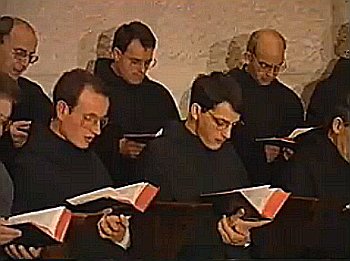 Saint Alban’s and its Music Director Mr. Bernard Riley will host a singing workshop for DMAS and all interested ACC clergy, deacons, Scott school students, cantors or other prospective gentlemen singers on Saturday February 19th from 9 a.m. – 2:30 p.m. including lunch at St. Albans. The workshop will treat of liturgical singing emphasizing the Mass and also the offices with regards to the questions “if?” , “when?”, “why?” and “how?”
If you are coming from out of town and need accommodations, please let us know as soon as possible.
In Christ,
Canon Nalls
Epiphany Week Wrap-Up
Posted in Pro-Cathedral, Special Events on January 10, 2011| Leave a Comment »
It has been a busy and wonderful Epiphany week at Saint Alban’s. First, our thanks to all who made the Epiphany evening gala and art auction a stunning success, especially Ron and Holly Brinton, Kenny Garbee (and her merry band!), Bernard Riley and the music team, Eunice Green, and the many folks who gave time, treasure and talent. It was an evening of fun, fellowship and fundraising that let others in our Richmond community and in neignboring parishes see the Saint Alban’s parish family at their very best.
The following evening the families of the parish gathered for their monthly movie night and a viewing of the film Fireproof. A serious treatment of issues facing marriages, the movie offered useful insights into how to preserve the marriage relationship through prayer and persistence. There was not a dry eye in the house, as well.
The next movie night will begin at 6:00 p.m. on Friday, February 4, with pizza as the main course. Stay tuned for the name of the main feature!
Kathryn Ann (Woodson) Batte
Posted in Special Events on December 31, 2010| Leave a Comment »
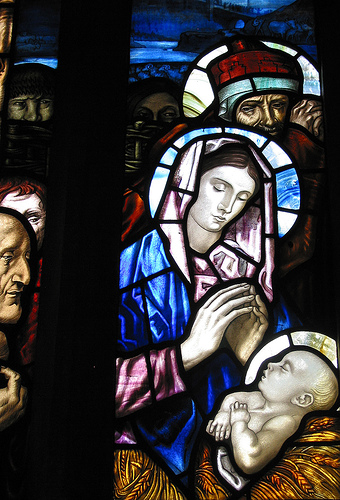
Longtime and beloved Saint Alban’s parishioner Kathryn Ann (Woodson) Batte entered the Larger Life in Christ this morning at 8:35 a.m. having received Holy Unction last evening. A requiem Mass is scheduled for 11:00 am Tuesday, January 4, 2011 at Saint Alban’s. “Kitty” Batte will be remembered for her deep and abiding faith and generous spirit.
May her soul, with the souls of the faithful departed, rest in peace. And may Light Perpetual shine upon her.
Evangelism Conference Notes
Posted in Evangelism, Special Events on December 29, 2010| Leave a Comment »
“Evangelism-A Discussion and Exposition of Basic Issues.”
A Conference Given on July 31, 2010
Saint Alban’s Pro-Cathedral (ACC), Diocese of the Mid-Atlantic States
Conference Director: The Very Reverend Canon Charles H. Nalls
– Healing Services
– Offer house blessings
– Music
– Start and end with prayer
– Build your church building or make the existing facility presentable
– Include the basic message of the salvation via worship (here)
– Petition the Lord for guidance
– Bible study
– Courses to explain the Anglican Ethos
– Know God is behind you / supports you
– Examine yourself
– Confront fears
– Accept flaws
– Awareness of your sins before you forgive others
– Take initiative
– Watch for opportunities
2. Older
3. Family
-We need to tailor message – 5 minutes in person or through an electronic medium such as YouTube.
- Session Task: To list what has worked at the individual and parish levels in the past and to list what has failed. Parishes are invited to briefly share their experiences for inclusion in our post-conference notes. Of particular interest is the experience of younger parishioners who are encouraged to share their thoughts on why they are Christians and
Anglican-Catholics despite secular pressures. - Goal: To develop and share approaches, tactics and materials that have positively impacted evangelism, and to frankly discuss those approaches and behaviors that constitute “negative” or “toxic” evangelism and should be avoided.
- Results: This portion of the discussion was both lively and very frank. The consensus of the group was that continuing Anglicans had generally done a poor job of outreach or evangelism. While there are many obvious bright spots, a number of “parishes” have not grown over the last thirty-five years. More pointedly, participants believed that some long-established parishes may well be closed and disappear within a few years absent a concerted effort at evangelism and outreach.
– High Church/Low Church. Churchmanship is an important matter but not a “deal breaker”. The ACC has a wide range of liturgical expressions, but it is Christian and cathlic to its core. We must recognize that certain liturgical expressions will frighten away any mumber of people. One must grow into an appreciation of Anglican practice: beware of jumping into a “Spanish madrigal” show lest you want to empty a parish.
– Our basic Christian witness-For many, there are fundamental gaps in how we teach even the rudaments of the faith. Adult inquirers classes need to focus on the elements of Christianity and Biblical literacy.
Did we mention Biblical literacy? This ties squarely to clergy training and formation, as well as lay leader study and formation.
– Impersonal conversation. While we do not wish to counsel effusiveness, surely we wish to engage newcomers and inquirers in some form of conversation. Speaking only to the in-crowd is offputting.
– Are we present to the world? To often we do not get out of our cofortable little parishes. St. Paul took great chances, appearing in many different venues and cultural melieus. So the faith catholic spread. We do not use the opportunities such as new media, community events and face to face encounter to evangelize. We often are worried about reaction, manners or have a fear of talking about Christianty and Anglicanism.
– Irrelevance. We have to face the fact that we have, in some cases, evangelism materials that are decades old. Young people do not identify with the image of that dad in a fedora and driving a Hudson
sedan. Are we even familiar with the issues of the day, much less addressing them? This is not a plea to give in to the spirit of the age, or introduce pull down screens and liturgical dance. However, we must have a clear definition of who we are as part of the ancient church in the modern world.
– Teaching office-We have failed in many ways to teach basic faith. Anxiousness for membership has caused a lapse in catechesis. The need to work has hindered clergy from staying up on their studies, and the failure of some parishes to support clergy education-initial and continuing-impairs the teaching office. We must “teach the teachers” so they may in turn teach others in the faith catholic.
– GATEKEEPING, GATEKEEPING, GATEKEEPING-A number of participants indicated a need to give up “Anrgicanism”. Few people wish to hear of the sleights and wounds of the past, even if they were even aware of them. Remember: the Anglican-Catholic Church was founded over 35 years ago, and the grave events of things like Deerfiend Beach (Do you know what that is?) are nearly 20 years gone by. This is not a cry to forget history, but to keep it in perspective. As well, those who would impose a personal standard on others who approach Christ’s Church do little to check the log in their own eye.
– Direct invitation-“Come taste and see how good it is” is effective. Christianity Today surveys indicate that the single most effective method of outreach or evangelism is the personal invitation.
– Counter-cultural-We are counter-cultural as Anglican Catholics. We stand in stark relief to the cheap and easy of post-modern culture and morality. “I want something better in my life,” is the opening to tell people that there is that something. We know that it works, but it involves a process of growing accustomed to that counter-cultural melieu in which the newcomer has entered.
– Symbolism => Sacraments, true reality-There is a reality to the Sacraments that is profound and deep. The symbolism of our worship draws people toward that reality until they finally confront it. We need to keep this tied to Scripture.
– Meeting people where they are (loving people). This speaks for itself.
– Presenting a win-win-This point emphasizes that we need to keep the negative at bay.
– Involvement-Again, our involvement in and engagement with the community around us makes Christ present to the world. People are drawn to that.
– Bible Study-This is the most emphasized point by the participants. A Biblically literate, thinking individual-properly guided by orthodox teaching-is the single most effective member of the parish. Whether it is apologetic, or teaching or daily life, a parishioner well-armed with the Word is an effective force for evangelism.
– Living with Faith-Here is a straightforward point: where our parishes have taught the faith and have lived it, they have grown. Where we have concentrated on mere appearance of faith, we have withered and died.
– Prayer life-Parishes must seek to foster a regular prayer life among the members. This, in turn, draws others into that circle of prayer.
– Community/Communion-In an impersonal world, our parish offers a real community, one not founded on contract or rule, but bound together in a mystical body. We are all parts of that body and the unique
roles for each makes this wholly unlike any any other group to which one might attach oneself seeking community.
2. Education/Retention:
– Teach the faith
– User friendly:
– Worship bulletins/booklets
– Greeter/Mentor
– Classes to be Greeter/Mentor
– Guestbook sign in
– Follow up to sign in
– Priest
– lay person
– Consistent Worship Services
– Be positive
– Warm welcome (not smothering)
– Create opportunities for all kinds of service
– Instructive Service
– Youth Service
– How you do your job tells much about how you live out Christian values.
– They might say no
– Dismissal
Warmth of the Season
Posted in Special Events on December 19, 2010| Leave a Comment »
 All,
All,
You know that I rarely send out an appeal for funds for any cause, but there has been another church furnace disappearance. Unlike the theft of St. Athanasius’ furnace several years back (in which your generosity saved that parish property), the heating plant at the Angllican Church of the Resurrection (ACC) in Ansonia Connecticut was carried off by time and age. The heating plant failed last week, and the church is struggling with besetting cold this Christmas. There is a need to keep the pipes from freezing, as well as the parishioners. There is a need for funds for portable heaters to carry the folks through Christmas, as well as to rplace the plant itself. I know that these times have strained the limits of giving for many, but I ask you to pray and send whatever amount God puts on your heart to: Church of the Recurrection (ACC), 6 Church Street, Ansonia, CT 06401. Please mark the memo on the check: “Furnace Fund”.
You can genuinely support the “warmth of the season” by giving generously to this most worthy cause.
Advent blessings,
Canon Nalls
Advent Quiet Day of Prayer and Reflection
Posted in Parish Events, Retreats, Special Events on December 2, 2010| Leave a Comment »
Saint Alban’s Advent Quiet Day Retreat of prayer and meditation has been moved to Saturday, December 18th beginning at 9:00 a.m. The three meditations will focus on the nature of prayer, proper ways of praying and the thoughts on maintaining a good prayer life. Meditations will be loosely based on the short book Prayer:A Field Guide by Canon Nalls, but no prior readings are necessary for the retreat. Copies of book, will, however, be available for purchase after the retreat with all profit going to the ACC’s Society of Saint Paul to support mission work. The retreat schedule is as follows:
0900-Matins
0930-Coffee
0945-First Meditation-Why pray?
1045-Break
1100-Second Meditation-Problems of prayer: what if God says, “No”?
1200-Benedictine Lunch (Soup and Bread) with a Reading
1300-Third Meditation-Prayers to redeem the time.
1400-Break
1415-Evensong
Silence will be kept throughout the day, including break times, except for the readers and during Matins and Evensong.
Please e-mail the church office at stalbansacc@gmail.com or ring 804-262-6100.
Sermon Notes For Saint Andrew’s Day-2010
Posted in Saint's Days, Sermons, Special Events on December 1, 2010| Leave a Comment »

(Given at the Parish of Ss. Andrew and Margaret, Alexandria, Virginia)
“How beautiful are the feet of them that preach the gospel of peace, and bring glad tidings of good things.” –Romans 10:15.
I was honored to be asked by Fr. Nick to be asked to deliver the homily on this feast of Saint Andrew and to celebrate the Kirkin’ o’ the Tartan. You see, whenever we come around to Saint Andrew’s Day in the church calendar I am reminded of my mother who was a grand-child of the diaspora—no, not the one from the book of Exodus–but one that ran from Glasgow to Belfast to the States to here.
She was a woman who took great delight in letting everyone, and I mean everyone, know about her Scottishness, particularly my father, of the plight of the poor Englishman—the Englishman whose national costume is a worn raincoat patented by one Charles MacIntosh, a Glaswegian. She would remind my dad that the Englishman drives a car fitted with tires invented by John Boyd Dunlop of Dreghorn…Scotland. At the office he receives his mail with adhesive stamps which, although they bear the queen of England’s head, were invented by John Chambers of Dundee…Scotland. The Englishman might have occasion to use the telephone, invented by Alexander Graham Bell of Edinburgh, which is of course, in Scotland.
At home in the evening, the English squire watches the news on a tellly which was invented by John Logie Baird of Helensburough…Scotland and hears an item about the U.S. Navy founded by John Paul Jones of Kirkbean, Scotland. Now having been reminded too much of Scotland of the Scots, in desperation the gent picks up the Bible, only to find that the first man mentioned in the foreword of good book is a Scot – King James VI – who authorized its translation.
Nowhere, nowhere can an Englishman turn to escape the ingenuity of the Scots. He could take to drink but the Scots make the finest in the world—in despair over the omnipresent Scots, he might think of ending it all, only to find that his breech-loading rifle was invented by Captain Patrick Ferguson of Pitfours, Scotland. So he goes back to the previous step, sipping single malt and contemplating his fortune, safe…safe in the Bank of England which…founded by William Patterson of Dumfries, Scotland.
Ingenious and omnipresent, these Scots—they seem to travel everywhere. And they have been a faithful people, for there is a long history of Scottish missionary zeal throughout the world. There are few things more formidable than a Scots preacher—in one church in Indiana where I served as a youth pastor during college they maintained that their Scottish founder rode more than a million miles in his 50 year ministry. Perhaps that is why the expression in his portrait which hung in the sanctuary was so pained. But, this missionary zeal may well account for Saint Andrew’s patronage over the Scots.
And so we turn to the Saint whom we commemorate this day-one of the patron Saints of this parish. Saint Andrew’s life teaches us so much about Christian discipleship and the need for missionary zeal, and gives us a great example as we have just begun this holy the season of Advent. I’d like to focus on three elements: Andrew’s time at the Jordan, his bringing others to Christ, and then his preaching of the Gospel even unto death.
We first encounter St. Andrew at the Jordan River with St. John the Baptist, “the forerunner”—the forerunner of the Jesus, who was there making straight the paths to receive the Lord. Those paths were straight enough in Andrew’s heart and mind so that when John Baptist, one day, looked up and said, “Behold the Lamb of God!” Saint Andrew immediately left John and went and saw where Jesus lived. (John 1:35) After only a few hours, Andrew had recognized Christ Jesus as the Messiah. He went to fetch his brother Simon, told him that he had found the Messiah, and brought Simon to Jesus.
Andrew and Simon Peter then returned to their fishing business in Capernaum, but not for long. As we hears in our second reading from Gospel of Saint Matthew (St. Matt. 4:18), Jesus saw them again and called them from their boats to make them fishers of men. Their response: they immediately abandoned their nets and became his followers. (John 2:43-44)
Later on we find Andrew bringing both the boy with the five loaves and two fish to the Lord-the raw material for Jesus’ great miracle of the feeding of five-thousand. After Pentecost, Christian tradition says Andrew proclaimed the Gospel in Greece, which led to his martyrdom in Patras, being crucified on a decussate or X-Shaped cross in Achaia, northern Greece.
The passage in our first reading is a free quotation from the prophet Isaiah, applied by Saint Paul to the glorious proclamation of the Gospel to the world, and therefore especially appropriate for our consideration upon the feast of the first missionary, Saint Andrew. The text brings before us the dignity, importance and moral beauty of missionary work.
Advent brings home for us the fact that world is waiting in darkness even as on the eve of the Nativity. Individual souls even in nominally Christian lands are waiting to have brought home to them, by the words or influence of some Christian worker, some missionary for Christ, that truth which is the most precious in the world—the value of the soul as the object of God’s love, its future in heaven or hell, and the means of its salvation as summed up in the Gospel of Jesus Christ.
The circumstances under which Isaiah uttered this beautiful passage recounted in the Epistle of Saint Paul to the Romans is important to our message. The second portion of the prophecy of Isaiah, from the fortieth chapter to the end, is concerned with the return to Jerusalem of the exiles from Babylon. It is mingled with the prophecy of that glorious restoration that he foresees the establishment of the Messianic kingdom, and the proclamation of the Gospel to all nations.
First, then, Jerusalem in the time of Cyrus is represented with a watchman upon its walls, announcing the appearance over the surrounding mountains of the messengers who herald the approach of the returning exiles. “How beautiful upon the mountains are the feet of him that bringeth good tidings that publisheth peace.” The messenger is glorified, and made and becomes beautiful on account of the message that he brings. Long had the city lain in ruins. Now once more it was to be rebuilt, and the worship of God restored in His temple.
And by the time that Saint Paul wrote, the Messiah had come and had been rejected. He had wept over the city He loved so well, and proclaimed its doom. But with the fall of the earthly Jerusalem the universal kingdom of Christ was to be established at the Second Advent. So Saint Paul applies the passage, not to those who are approaching, but to those who are leaving Jerusalem—going out from Jerusalem–with the knowledge of Christ, to proclaim the Gospel to the whole world.
As we hear in the words of the Psalmist, “BE joyful in the LORD, all ye lands: * serve the LORD with gladness, and come before his presence with a song.” The great commission as prefigured in the Psalms.
Jew and Gentile alike lay in the darkness and moral ruin; but the message of peace was sent forth, and the messengers who bore it were the missionaries of the Gospel. In our own day the majority of the world is still in the darkness of heathenism, or slipping into unbelief, and even among Christian nations there is much room for missionary work,
St. Paul, in applying these words of Isaiah, gives expression to his conception of the splendor of missionary endeavor. It is the bringing to souls, held in a captivity worse than that of Babylon, the good news of salvation; and the first messengers who cross the mountains around Jerusalem to go out to the world with the Gospel of Christ are the Apostles.
Beloved in Christ, it is to missionary work that all the Christian world at one time or another owes its knowledge of Jesus. Every Christian nation has its story of the pioneers of Christianity, its soldiers of Christ, the first who brought the good tidings to that country while it was still heathen. But of all this noble army Saint Andrew is the leader, the first missionary, the first to follow Christ, the first to bring another soul to Jesus.
You see, Saint Andrew had truly the missionary spirit of promptness in accepting Christ’s invitation, “Come and see” (Saint John :39); of zeal in bringing another, his brother Peter, to Christ; and later, of readiness in obeying Christ’s call to leave his boats and nets, and to follow Him. He had the missionary’s love of souls and fellow man, the missionary’s appreciation of the capacity of the soul for the call of Christ. (St. John 12:20-22).
As Saint John Chrysostom once noted, look at the faith of Andrew and his brother and their obedience. For though they were in the midst of their work when they heard his command they did not delay or procrastinate. They did not look inward to what they had, and try a cost benefit analysis or even say, “Let us return home, and talk things over with our family.” Instead, “they left everything behind and followed,” even as Elisha did when he followed Elijah. For Christ seeks this kind of obedience from us, such that we delay not even for a moment, no matter what excuse we may think that we have to resist the call.
As to the second question, the missionary imperative, Saint Andrew’s first instinct was to bring others to Christ. As we have heard, the first man he brought was his brother Simon. How could he possibly know what the Lord had in store for his brother? His sibling, a simple fisherman like him, was to be made the rock on whom the Lord would build his Church. Who knows what the Christ might do with those we introduce or bring closer to him?
God may need us to be the instrument, or the fishing hook, even to bring future deacons, priests, bishops, religious, or even great saints to him. Likewise, little did Saint Andrew know that bringing the simple boy with fish and bread to the Lord would lead to one of the greatest miracles Jesus ever performed, or that his introducing some Greeks, some non-believers to Christ, would inaugurate a new stage in the spreading of the Good News. We just never know what can happen when we introduce someone to Jesus.
Here is a key lesson for those of us who are traditional Anglicans. After the years in the wilderness, we have may have grown comfortable, comfortable in our parishes, perhaps even complacent in our lives. How easy it is to look inward—inward to the boats, and nets and things that make the livings that make life comfortable. The inward gaze, to run home to evaluate or question the call to follow and fish, that will be the end for us. We shall become a footnote to ecclesiastical history. Beloved in Christ, we are called out as was Saint Andrew—we are called to bring the unalloyed faith to a darkened and hurting world. So, let us redouble our efforts this Advent and in memory of Saint Andrew to bring each other into closer relationship with Christ and to bring others to him—it is our mission.
Finally, Saint Andrew brought people to the Lord not just by his actions, but by his words as well. We don’t have any extant letters or homilies from him. But we do have an ancient account of his martyrdom, in which we can see the way he died and extrapolate from there to how he would have lived.
The martyrdom account says that it took him 38 hours to die on that X-shaped Cross. During those two days, it adds, he preached incessantly to the people. We can only imagine how difficult it must have been for St. Andrew to preach under those circumstances, difficult even to draw breath. Yet, he preached the Gospel not only with his lips, but in his life and until its very end. This ultimate witness on the Cross, his two-day long martyrdom, shows us quite clearly how much he was dying to bring the Good news to others, a truth worth living for until the very end, and a truth worth dying for.
So, on this Saint’s day, let us ask the tough questions…the Saint Andrew’s questions. Do we have his missionary spirit, and what are we doing to show it? In regard to home missions, are we interested in the souls of our friends and relations in leading them to Christ?
With respect to foreign missions, to our ACC Missionary Society of St. Paul, do we devote time to a study of missionary fields, their needs, and possibilities? Are we regular in prayer for all foreign missions, and especially for those for which we have undertaken to pray? In almsgiving, do we strive to support others in the mission field?
Surely Saint Andrew’s Day calls us all to renewed effort in missionary work, and Saint Paul reminds us “How beautiful are the feet of them that preach the gospel of peace, and bring glad tidings of good things,” and this applies not only to those who go out themselves into the mission field, but to those who by their prayers and alms enable others to act as substitutes for them.
And so we turn to St. Andrew as we prepare to cross the threshold of Advent and ask that it might be a great period of preparation for us. May we be serious about making straight the paths for the Lord, so that when we hear the words “Behold the Lamb of God”, we may cling to this Lamb, bring others to Him, and preach Him, with our lives and with our lips, for as long as we have breath! Amen!
Thanksgiving Day
Posted in Special Events on November 24, 2010| Leave a Comment »
There will be Morning Prayer at 9:30 a.m. with sung offices on Thanksgiving Day. We will follow with Mass at 10:30 a.m.
Collect for Thanksgiving Day
O MOST merciful Father, who hast blessed the labours of the husbandman in the returns of the fruits of the earth; We give thee humble and hearty thanks for this thy bounty; beseeching thee to continue thy loving-kindness to us, that our land may still yield her increase, to thy glory and our comfort; through Jesus Christ our Lord. Amen.
Opportunities for Charity
Posted in Christmas, Special Events on November 18, 2010| Leave a Comment »
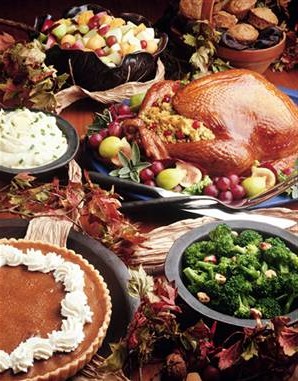 Saint Alban’s traditionally assists families in need, particularly at the holidays. This year, we have learned that a family of 10 here in Richmond lost their home and contents to a fire. On Wednesday the 24th, we will be delivering food baskets to them and to another family of four also in dire need. We ask all to be generous to these our neighbors in Sunday’s almsgiving.
O LORD our heavenly Father, whose blessed Son came not to be ministered unto, but to minister; We beseech thee to bless all who, following in his steps, give themselves to the service of their fellow men. Endue them with wisdom, patience, and courage, that they may strengthen the weak and raise up those who fall; and, being inspired by thy love, may worthily minister in thy Name to the suffering, the friendless, and the needy; for the sake of him who laid down his life for us, the same thy Son, our Saviour, Jesus Christ. Amen.
As well, as is the custom of the parish, we are again supporting the Toys for Tots program. Please bring a new, unwrapped toy to the collection box in the parish hall before December 13th. 
Blessings!
Canon Nalls
 The Cathedral Close