Feeds:
Posts
Comments

thomasbelievingAt daily Matins here at St. Alban’s, we customarily sing a hymn from The Hymnal Noted edited by The Rev. John Mason Neale and The Rev. Thomas Helmore.   Reprinted by the Lancelot Andrewes Press, this is a gem that brings a richness to the daily office particularly on saints’ days.  This is certainly the case on this Feast of St. Thomas the Apostle and as we enter the last days of Advent.  If you are used to chanting your offices, these hymns should not prove difficult.  However, even if you are a beginner, these should be easy to get your arms around with just a little practice.

Apart from the music adding a joyful noise to the office, the words of these hymns give a theological shape to morning and evening prayer, as well as bit of poetry.  So, even if you are alone or are not yet ready to sing, there is a real benefit to including just the words to your prayers.  If you’d like to know more or to practice, St. Alban’s is having a music and choir festival on January 23rd beginning at 8:00 am.  There is no charge, but folks may wish to place a love offering in the basket to help us cover costs for what promises to be a wonderful day.   Now, for this morning’s hymn, number 65, Veni, veni, Emmanuel. (note some of the different words).

1. Draw nigh, draw nigh, Emmanuel
And loose Thy captive Israel,
That mourns in lonely exile here,
Until the Son of God appear;
Rejoice! rejoice! Emmanuel
Is born for thee, O Israel!

2. O Rod of Jesse’s stem, arise,
And free us from our enemies,
And set us loose from Satan’s chains,
And from the pit with all its pains!
Rejoice! rejoice! Emmanuel
Is born for thee, O Israel!

3. Thou, the true East, draw nigh, draw nigh,
To give us comfort from on high!
And drive away the shades of night,
And pierce the clouds, and bring us light!
Rejoice! rejoice! Emmanuel
Is born for thee, O Israel!

4. Key of the House of David, come!
Reopen Thou our heavenly home!
Make safe the way that we must go,
And close the path that leads below.
Rejoice! rejoice! Emmanuel
Is born for thee, O Israel!

5. Ruler and Lord, draw nigh, draw nigh!
Who to Thy flock in Sinai
Didst give, of ancient times, Thy Law,
In cloud and majesty and awe.
Rejoice! rejoice! Emmanuel
Is born for thee, O Israel!


Secundum Lucam


Wulfstan

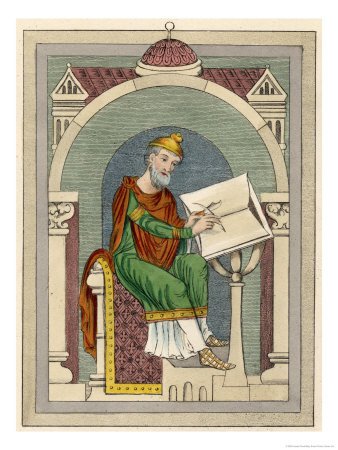
Today, I’d like to share a sermon for the Second Sunday in Advent by Archbishop Wulfstan of York (d. 1023).

“There will be signs in the sun and the moon and the stars, etc.” This gospel says and makes clear that many portents must occur widely in the world, both in the heavenly stars and in earthly movements, before the judgment comes that is common to us all. And certainly, just as a flood came once before because of sin, so also a fire will come over mankind because of sin, and it is now coming very quickly. And therefore there are many and varied evil events occuring widely among people, and it is all because of sin. And yet more evils and afflictions will come, as the book says, than ever happened before anywhere in the world; that is, when Antichrist rages and terrifies all the world, and that is now coming very quickly. And therefore it is always the longer the worse in the world, as we ourselves know very well.

And it is also clear and to be seen within ourselves that we obey our Lord too weakly, and that we are too disbelieving of God’s might and his mercy, and that we anger him more often than we need to, and also that we keep good faith among ourselves too weakly in front of God and the world. And therefore many evil events injure and afflict us harshly, and foreigners and strangers severely oppress us, just as Christ clearly said must happen in his gospel. He said, “Nation will rise up against nation, etc.” That is in English, “nations will rise up,” he said, and become opposed, and strive violently and contend among themselves because of the injustice that has become too widespread among people on earth.”

Beloved people, this earth was clean at its creation, but we have since greatly fouled and defiled it with our sins. And our misdeeds also constantly accuse us, because we do not want to hold God’s law as we should, nor to grant to God what we should. Nor do we give tithes as is required of us, nor distribute alms as we need to, but in every way all that we should do in God’s grace lessens. And therefore much of creation also oppresses and strives against us, just as it is written: “the world will fight for God against insensible men.” That is in English, all the world strives greatly against proud people who will not obey God, because of their sins. Heaven strives against us when it sternly sends us storms that greatly injure cattle and land.

The earth strives against us when it withholds earthly fruits and sends us too many weeds. It is also written that the sun will grow dark before the world ends and the moon will darken and the stars fall because of the people’s sins, and that will be when Antichrist rages that it will be like as if it were so. It is said that the sun will grow dark; that is, when God will not reveal in Antichrist’s time his strength and his power as he often did before. Then it will be like as if the sun had grown dark. And the moon, it says, will darken. That is, that God’s saints will not perform any miracles then as they often did before. And the stars, it says, will fall from heaven. That is, that liars and false Christians will quickly fall from correct belief and eagerly bow down to Antichrist and honor his helpers with all their might. And then there will be the greatest terror that ever was, and the most widespread persecution in the world. Then kinsmen will not protect kinsmen any more than strangers.

And about that terrifying time Matthew the evangelist truly said thus: “In those days there will be such tribulations as have never been from the beginning of the world or afterwards.” That is in English, that such misery and affliction will then be in the world such as never before was nor ever again will be. And quickly afterwards all the hosts of heaven will be roused through divine might; and earthdwellers will be raised from death to the judgment. Then the one who before would not believe the truth will know that Christ in his majesty will repay each person for his earlier deeds.

Woe to the one who earlier earned the torments of hell! There are eternal flames grimly flickering and there is eternal horror; there is groaning and lamentation and perpetual wailing; there is each and every terror and a crowd of all the devils. Woe to the one who must dwell there in torment! It would be better for him if he had never become a man than that he come to this. For there is no one living who may tell of all the horrors that he must endure, he who falls entirely into that torment. And it is worst of all that no end at all will ever come for him in the world.

Alas, beloved people, let us do what is needful for us, protect ourselves earnestly against that terror and help ourselves while we may and might, lest we die when we least expect to. But let us love God above all other things and work his will as earnestly as we can: then he will repay us as will be most pleasing to us when we have the best need. To him be praise and glory in all the world, world without end, amen.

St. Alban’s Special Events


SPECIAL NOTICE-PARISH ANNUAL MEETING AND HOMECOMING DECEMBER 6, 2015
There will be a single service at 10:00 am followed by the annual meeting and all parish lunch.  Please plan to bring something for the lunch and let us know what you’s line to prepare either on the sign up sheet in the parish hall or by e-mail to stirenaeus@hotmail.com
Even if you have been away from your parish home for awhile, this is a great opportunity to catch up with “family” and learn of all the great things going on at St. Alban’s!  
 THANKSGIVING DAY-2015
Holy Eucharist-10:00 am
Parish Community Dinner-3:00 p.m.  Please bring a covered dish or a dessert.

A Powerful Sermon


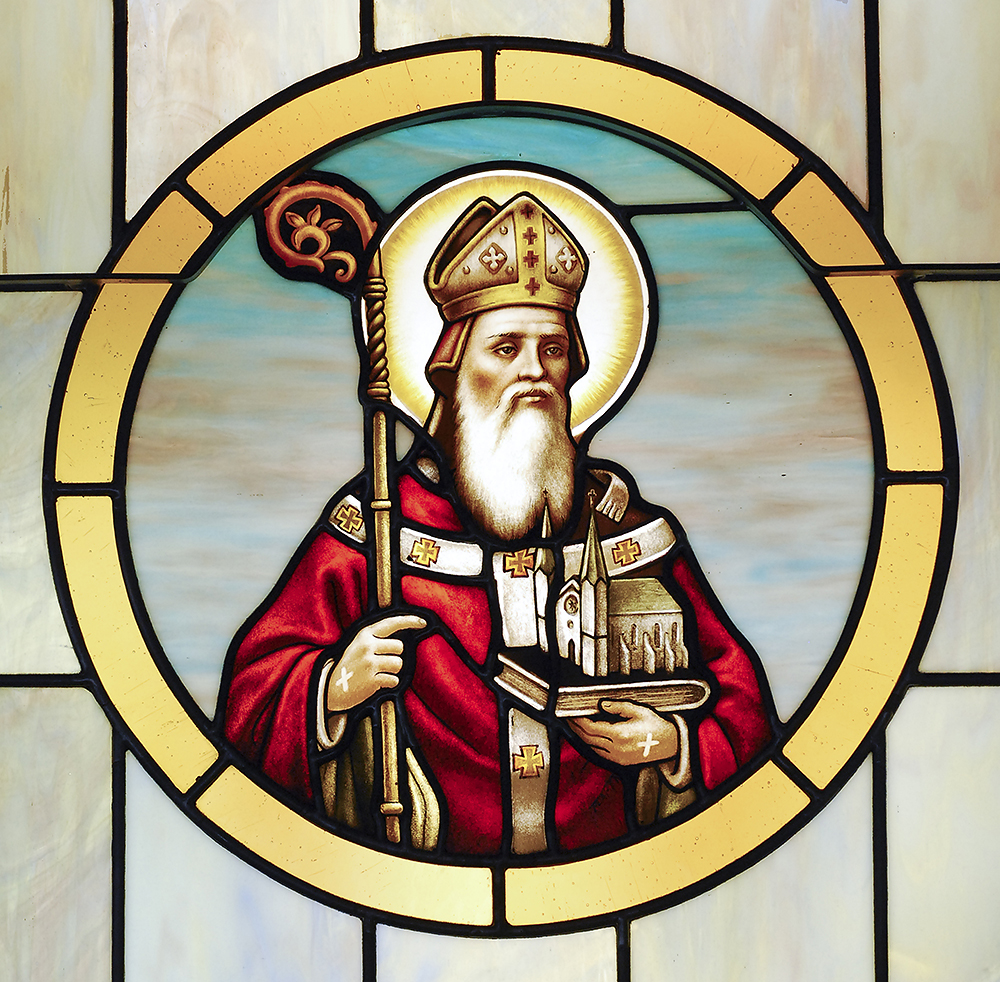
St_-WillibrordOn this Seventh Day in the Octave of All Saints and the Feast of St. Willibroard, we do well to meditate on this powerful sermon by St. John Chrysostom, which is quoted in the Anglican Breviary.

“Whosoever wondereth, with reverent love, at the merits of the Saints, or whosoever speaketh, with oft much praise, on the glories of the Just, let him imitate their holy ways and their righteousness. For whoso findeth pleasure in the worthy deeds of any Saint should find pleasure in a like obedience in the service of God.

Wherefore, if he praise, let him imitate. If he will not imitate, let him cease from praising. For whoso praiseth another ought to make himself worthy of a like praise. And whoso admireth a Saint ought also to strive for to be admirable for a like holy living. If we love the righteous and faithful because we respect their righteousness and faith, we ought for that very reason to do what they did, in order that we may become what they are.

It is not an hard saying, that we imitate their good deeds. For we now have their examples, whereas they of old times had no foregoing examples; and so without being imitators of good examples, they nonetheless have become good examples to us. Thus, if we profit by them, others will profit by us, and Christ will ever be glorified, in a succession of servants of his holy Church. Begin at the beginning of the world, and consider these holy examples: Blameless Abel was slain; Enoch walked with God, and was seen no more, for God took him; Noah was found righteous; Abraham was proved faithful; Moses was the meekest of men ; Joshua was single-minded; David was mild; Elijah was taken up; Daniel was holy; and the Three Children were conquerors.

The Apostles, being disciples of Christ, are reckoned as the teachers of believers. Taught by them, the valiant Confessors give battle; the triumphant Martyrs excel in victory; and all the hosts of Christians, if they arm themselves with God, are ever vanquishing the devil. All these are men of like valour, though dissimilar in warfare, and so obtain glorious victories. Wherefore, O Christian, thou art an effeminate kind of soldier if thou thinkest to conquer without battling, or to triumph without struggling. Put forth thy strength. Contend like a man. Fight fiercely in thy battle. Know the warfare: the oath of loyalty thou hast taken; the conditions under which thou has been accepted; and the kind of war for which thou hast enlisted.

Jamaican Dinner-August 1


Flag_of_Jamaica_svg

Please join us at St. Alban’s on August 1 between 4:00 and 8:00 pm for a dinner sponsored by the Jamaican Association of Richmond.  Enjoy great Jamaican dishes such as jerk chicken and pork, curry chicken and curry goat and patties. There will be special desserts.  There is no charge, but donations for this wonderful meal are most welcome!

jerk chicken

No Ambiguity


ambiguity_road_signThe following is an homily preached by Abp. Mark Haverland at the recent International Catholic Congress in Ft. Worth, Texas.   Apparently, some in attendance were upset by it.  Perhaps, in a world of ambiguity, they were put off by the straightforward nature of the message.  As the Archbishop lays it out, there are “non-negotiables” in the catholic faith.  For all of the difficulties in continuing Anglicanism, we have stood fast in a time of change for the sake of change and an increasing ambiguity even in the case of those who claim orthodoxy or catholicity.  Particularly in the face of the increasing challenges facing orthodox Christians, the time is long past to compromise the Faith at any level.

Evensong, Forward-in-Faith/North America

15 July 2015

Psalm cxxxiii, verse 3 – Jerusalem is built as a city that is at unity in itself.

In the Name of the Father, and of the Son, and of the Holy Ghost.  Amen.

I was trained to believe that sermons are not meant primarily to prove or to instruct, much less to argue.  Rather sermons are primarily meant to proclaim:  to proclaim the Incarnation, the Cross, and the Resurrection of our Lord.  I hope this idea animates my Sunday Mass sermons.  But Evensong or Evensong and Benediction are somewhat different from Sunday morning.  We read in a delightful miscellany on the Church and clergy by A.N. Wilson of a priest who for forty years ‘preached on a variety of themes at his morning Mass, but thought it inappropriate, at…Benediction, to preach on any subject other than the Empress Josephine.’ (A.N. Wilson, ed., 1992, p. 240)   I don’t plan to be quite that bad.  But when Bishop Ackerman invited me last year to this event I told him that I would have to address what seems to me the central problem with most of the efforts of Forward-in-Faith and its precursors and now also with the ACNA.  I was invited nonetheless, so here is something with a bit of polemic in it, as promised.  I will not say with Trevor Huddleston that I have naught for your comfort.  But neither will I speak smooth things.

The central problem of which I just spoke is a lack of theological clarity and consistency and, to be blunt, catholicity.  That is a rather provocative assertion.  Let me offer an initial qualification, if not apology.  I know that the religious world is filled with huge problems which are of much greater apparent importance than the intramural fusses of soi-disant Anglo-Catholics.  In a world of resurgent and violent Islam and a secularizing America, our intramural differences may seem minor.  I do not wish to indulge in the sadism of small differences.  But then I happen to think that Anglicanism is central to the fate of the West, and that the near collapse of orthodox Anglicanism since the mid-20th century is at least indirectly tied to our wider troubles.  So, back to the question of theological clarity, which I do not think is in fact a minor problem.

The Anglican alternative to the paths taken by Forward-in-Faith and ACNA is Continuing Anglicanism.  Despite all of our checkered history and with all our failures, I think we Continuers have theological integrity.  That integrity is not a subjective or personal matter, but rests on an objective theological base, expressed clearly in the Affirmation of Saint Louis.  This foundation situates us irrevocably within the central Tradition of Catholic Christendom. All Anglican formularies are seen by the Affirmation through the lens of the central Tradition.  Anglican formularies are not a kind of Occam’s razor to limit what is acceptable in Catholic tradition for Anglicans.  Rather the Catholic consensus and central Tradition are the lens through which we read and appropriate our Anglicanism.  This central Tradition is found in the Fathers and the Seven Councils and in the consensus of East and West, ancient and modern and living still.  For us, the central problem of the Episcopal Church and of the Anglican Communion is not Gene Robinson or an error concerning any particular person or issue.  Rather the fundamental problem was an implicit assertion, decades ago, that the central Tradition of Christendom is at the disposal of Episcopalian Conventions or Anglican Synods or Lambeth Conferences.  It is not.  The Affirmation and my own Church’s formularies firmly, decisively, and forever reject doctrinal ambiguity, comprehensiveness, or the attempt to make our peculiarities decisive and determinative.  We are not Anglicans first and Catholics second.  We are members of the One Holy Catholic and Apostolic Church first, and Anglicans second.  We will vigorously pursue unity with all others who share this central belief.  No unity, at least no full or Eucharistic communion, is possible or desirable with those who do not share this starting point.

I congratulate the ACNA for leaving the Episcopal Church and Anglican Church of Canada.  Every one of you who made that change did a good thing and one, I hope, that you do not regret.  But that departure can only be a good first step.  For ACNA is really not a Church but a coalition of dioceses.  The coalition is for some purposes only, and the communion of the dioceses is impaired and imperfect.  The ACNA has retained the central flaw of the recent Lambeth Communion because it permits member dioceses to ordain women to the three-fold ministry, and therefore implicitly claims that the central Tradition is not decisive and may be set aside.  ACNA is not a return to orthodox Anglicanism, but only a return to the impaired state of the Lambeth Communion that began in 1975 and 1976.

Continued ambiguity or confusion about the central tradition and women’s ordination is very dangerous.  It is very dangerous because it encourages Catholic churchmen to compromise themselves in a variety of ways.  Perhaps just as bad, fine, bright, and consistent Catholics will perceive that there is no certain trumpet, no clear ecclesiology, and no real future in a world of such compromises – and so you will continue to suffer the death by a thousand cuts, as people go to Rome or Orthodoxy or the Continuing Church or just stay home.

There are excellent reasons to be both Catholic and Anglican.  Anglo-Catholics enjoy the great strengths of the Anglican patrimony.  We have the Authorized Version of the Bible and the classical Book of Common Prayer.  Together these are not only compelling literary and cultural monuments, but also provide us with an well-balanced spirituality.  In some Christian bodies the Bible is loosed from tradition and from the praying Church.  Of these bodies Richard Hooker wrote:

When they and their Bibles were alone together, what strange fantastical opinion soever at any time entered into their heads, their use was to think the Spirit taught it them.  (Laws, Preface, VIII.7)

The Prayer Book tradition in contrast provides an anchor, an objective interpretative lens, and a prayerful setting for traditional and orthodox interpretation of Scripture.  In other Christian bodies the sacraments have been loosed from Scripture and its constant fertilizing influence.  Scripture is neglected and the jewel of the Eucharist is pried loose from its golden setting in a round of offices centered on the systematic reading of Psalms and Scripture.  But for Anglican Catholics the sacraments are truly Scripture so prayed and read and presented as to be a large part of the very sacramental forms through which God pours forth his grace into our hearts.  In short, our tradition has an almost perfect balance of Bible and sacrament.  We begin with the Bible as presented in and with Common Prayer, but then add our Anglican patrimony of architecture, music, literature, spirituality, and theological method.  Those are formidable strengths.  How sad that so many neo-Anglicans have jettisoned the bulk of this patrimony by abandoning the classical Anglican liturgical tradition.

Dear friends, if you compromise with the ordination of women, and if you abandon the largest part of our Anglican patrimony by adopting modernist liturgy rooted in the Novus Ordo or, worse, in the Anglo-Baptist ideas of Sydney, there is little to hold people.  Then you can only trust in a kind of slightly more decorous imitation of Charles Stanley or the already-fading mega-churches.  You’ve given up both your Anglican past and also any future that can be meaningfully described as Anglican.

We must abandon all sectarian, provincial ideas that separate us from the central consensus of the Tradition of the great Churches.  We must take this duty seriously by systematically rooting our doctrine and practice in Catholic agreement.  Seven Councils, seven sacraments, invocation of the saints, objective sacramental efficacy, the Real Eucharistic Presence, clear moral teaching, male episcopate and priesthood and diaconate:  those are all matters of Catholic consensus.  That is what we must believe if we take seriously Archbishop Fisher’s assertion that we have no faith of our own.

The Catholic Movement in the Church of England began as an attempt to call all Anglicans back to the fullness of the Catholic Faith.  The goal was nothing less than the wholesale conversion of the entire Church to the fullness of the Faith.  The partial success of the Movement may have been its downfall.  When Anglo-Catholics became too successful to ignore or suppress, and were invited to the table to enjoy a share of the spoils – a percentage of the mitres and deaneries and professorships and plum parishes – Anglo-Catholics too often lowered their sights and quieted their voices.  From the conversion of the whole, we became satisfied with a slice of the pie, with a comfortable status as a recognized party.  But half-Catholic is as unreal as half-virgin.

If you still are in the Episcopal Church:  get out.  Get out today.  Anything else threatens your soul’s state.  Dear friends in ACNA:  you must present a clear and unmistakable demand.  The ordination of women must end, soon and completely, for it is directly contrary to Catholic doctrine.  No grand-fathering – or grand-mothering is possible – because such compromise leaves intact the central, revolutionary, and false implication that the deposit of the faith is negotiable and at our disposal.

Until there is such clarity, there will be no unity among those of us who like to think of ourselves as Catholic and Anglican Churchmen.  There will be no unity because you cannot be a pure cup of water in a dirty puddle.  That is the simple, basic message of the Continuing Church to the neo-Anglicans.  You have gone a very long way down a very wrong path, and that is true even if all the time you were avoiding a still worse path.  You have a journey home to make, things to unlearn and to remember and recover.  We want to welcome you at home.  But there can be no restored communion with us without hard decisions and firm actions from you.

Glory be to the Undivided Trinity.  Glory be to Jesus Christ on his throne of glory in heaven and in the Most Blessed Sacrament of the Altar.  All honor to the glorious and ever-Virgin Mother of our Lord.  Peace be to the Holy Churches of God.  May God forgive us our sins, which are many and great.  May God give us wisdom to discern a safe path forward.  May God grant us true humility and unshakable fidelity and great love.  May God bring our Church to glorious days and may he bring us to unity with all his holy people, so that Jerusalem may be as a city that is at unity in itself.

In the Name of the Father, and of the Son, and of the Holy Ghost.  Amen.

Creation Groaned


BenedictFrom a Sermon for the Fourth Sunday after Trinity, 2015, (Given at St. Alban’s, Richmond, Virginia)

“I reckon that the sufferings of this present time are not worthy to be compared with the glory which shall be revealed in us.”  -Romans 8:18

Friday, June 26th, in the year of our Lord 2015, creation groaned.  A man-made court issued a pronouncement on that which is not main-made but is ordained of God.  That Friday, God’s creation groaned as a man-made institution made a proclamation on marriage that is directly contrary to the law of God.  Against the law of the Constitution, too, perhaps, but more importantly for us as orthodox, traditional Christians it defied the law of God.  Creation groaned under its weight.

The ground under our feet has shifted fundamentally. “Discerning the meaning of the present moment requires sobriety, precisely because its radicalism requires of us as Christians a realistic sense of how weak our position is in post-Christian America.”

“It is now clear that extremism in the pursuit of the Sexual Revolution’s goals is no vice.” True, the Court gave a nod and a wink at the First Amendment in an attempt to calm those who might find themselves just a wee bit worried about religious liberty. But when a court is willing to invent rights out of nothing, it is impossible to have faith that the First Amendment will offer any but the most minimal protection to religious dissenters from homosexualist orthodoxy.  As Mr. Justice Alito warned, the decision “will be used to vilify Americans who are unwilling to assent to the new orthodoxy,” and will be used to oppress the faithful “by those who are determined to stamp out every vestige of dissent.”

Of course, the next goal of homosexualist activists will be a long-term campaign to remove tax-exempt status from religious institutions and faith-communities who will not submit. However, the more immediate goal will be the shunning, then the vilification and, finally, the persecution of dissenters within civil society. This already is happening in a number of venues ranging from wedding-cake bakers, to photographers who refuse to be party to homosexual “marriages”. As orthodox Christians, beloved in Christ, we must understand that this situation is going to get much more difficult for us.

As commentator Rod Dreher put it aptly, “We are going to have to learn how to live as exiles in our own country. We are going to have to learn how to live with at least a mild form of persecution.” And, so we are going to be called to suffer for our faith. We are going to have to change the way we practice our faith and teach it to our children.  To do this we are going to have to build resilient communities in the face of suffering.

We may look for easy answers, but there aren’t any.  Suffering is complex, but you know it is a part of love, real love—particularly of loving others as Christ loves us.  “The truth that many people never understand, until it is too late, is that the more you try to avoid suffering the more you suffer because smaller and more insignificant things begin to torture you in proportion to your fear of being hurt.” (Thomas Merton)

And so we come to the question of suffering which is treated straight on in the Epistle for the Fourth Sunday in Trinity.  Romans 8 is in a sense a unique passage in that it brings before us one of the most interesting and mysterious questions of human life: our fellowship in suffering with the world in which we live-a world that seemingly has taken leave of its senses-and the common redemption which awaits all creation.  This is the direction in which we must live, and work and teach.

Saint Paul’s main thought in this passage is that suffering is the pathway to glory.  Let’s say that again.  Suffering is the pathway to glory. And, since in that suffering it is not man alone, but all creation is involved, so all creation awaits and expects a redemption which shall be revealed through man when he reaches the goal of his life and enters upon the glories of eternity.  That’s a big theme.  That’s real comfort for us in times of suffering.

Saint Paul begins by comparing the sufferings of earth with the glories of heaven. Beloved in Christ, our sufferings are not light.  We know this in many ways. From the viewpoint of our broader Christian experience, the dreariest thing we can do is read or listen to the news, particularly in the last several days. In truth it has become a season of groaning, and the present one seems to be full of turbulence and distress.

St. Paul speaks of all creation groaning and travailing in pain. But here is the hope: so overwhelming is the glory to which they lead, that St. Paul deliberately reaches the conclusion that no real comparison is possible. We find the same thought expressed elsewhere in the words, “Our light affliction, which is but for a moment, worketh for us a far more exceeding and eternal weight of glory.”(2 Cor.)

How can he say this?  Well, my beloved, anyone who has only superficially studied Saint Paul’s life could fall into the error of believing that he had an easy go, a free ride, that he was unacquainted with sorrow and trial.  However, few people ever suffered more than he; but so clear is his conception of the glory to which these sufferings lead, that he speaks of them as “light,” as “but for a moment,” as “not to be compared with the glory which shall be revealed.”

So, then what are we to do, you and I?   As a third-order Benedictine, I have often said that a monastic type of life will be our future. This was echoed by Mr.  Dreher and others in the wake of Friday’s events.  We are called to what Mr. Dreher has identified as “the Benedict Option”.

In his 1982 book After Virtue, the philosopher Alasdair MacIntyre likened the current age to the fall of ancient Rome. He pointed to Benedict of Nursia, a pious young Christian who left the chaos of Rome to go to the woods to pray as an example for us. We who want to live by the traditional virtues, MacIntyre said, have to pioneer new ways of doing so in community. We await, he said “a new and doubtless very different St. Benedict,” while we await a new and different creation.

Throughout the early Middle Ages, St. Benedict’s communities formed monasteries, and kept the light of faith burning through the surrounding cultural darkness. Eventually, the Benedictine monks helped re-found civilization.

I believe that we orthodox Christians are called to be those new and very different St. Benedicts. So, how do we take the Benedict Option, and build resilient communities within our condition of internal exile, and under increasingly hostile conditions and suffering?

We can begin with fervent, regular prayer in community, of the sort that goes on in St. Alban’s every weekday morning at eight o’clock.  We must study as the Benedictines, and genuinely work at learning our faith in a deep and profound way.  We must teach as have the Benedictines in their renowned abbey schools. We must work tirelessly as do the Benedictines and be hospitable to the stranger and sojourner so that we can bring them inside the community to teach. I am not certain if there are other ways, but we had better figure this out together, and soon, as the hour have grown very late.

“The actions of our Supreme Court on Friday last are signs of the times for those with eyes to see. This isn’t the view of wild-eyed prophets wearing animal skins and shouting in the desert” or preaching repentance while chained to the top of a column in the village square. No. “This is the view of four Supreme Court justices, in effect declaring from the bench the decline and fall of the traditional American social, political, and legal order” and the concomitant impending suffering of the traditional Christian order.

St. Paul would remind us though that these pains and sufferings, which wring a groan not just from the faithful, but from all of nature, are but the travail pains which lead to birth into a better world. If we allow it, these sufferings will carry us up, up into a higher state than we now know. This is the hope which St. Paul sets before us.  This is the hope of all creation-to be delivered from the bondage of our present state, and to be born into a new world wherein dwelleth righteousness.

Now? Now we have sorrow in the experience of the birth pains which precede that deliverance. But, beloved in Christ, morning is coming.  Morning is coming and all nature will share with us in the glories of this deliverance.  Amen.

-With profound thanks to Mr. Rod Dreher, Orthodox Christian, whose Time article I have “borrowed” liberally throughout this sermon.


“LORD, thou hast been our refuge, * from one generation to another.”-Psalm 90:1

Longtime and well-loved parishioner Carolyn “Callie” Russell, wife of Charlie Russell, has entered the Larger Life in Christ. Services are scheduled for 11:00 am on Saturday, July 18th at St. Alban’s. A former Naval officer, she will be interred at Arlington National Cemetery at a date to be determined. Please join in offering our prayers to Charlie and the family:

REMEMBER thy servant, O Lord, according to the favour which thou bearest unto thy people, and grant that, increasing in knowledge and love of thee, she may go from strength to strength, in the life of perfect service, in thy heavenly kingdom; through Jesus Christ our Lord, who liveth and reigneth with thee and the Holy Ghost, ever, one God, world without end. Amen.

Memory Eternal.

In Christ,

Canon Nalls


REMINDER-On Sunday, June 21 there will be a single service at 10:00 am. Bp. Lerow will be visiting the parish for Confirmations. A lunch will follow the service. Please plan to bring a dish and join us for a wonderful Sunday.
In Christ,
Canon Nalls


Tomorrow at St. Alban’s, a relic of the first class of St. Gregory Nazianzus will be on the altar from 0800-0900 during the morning office.  All are welcome for prayer and veneration of this extraordinary saint of the undivided Church. Gregory of Nazianzus also known as Gregory the Theologian or Gregory Nazianzen, was a 4th-century Archbishop of Constantinople. He is widely considered the most accomplished rhetorical stylist of the patristic age.[As a classically trained orator and philosopher he infused Hellenism into the early church, establishing the paradigm of Byzantine theologians and church officials. St. Gregory made a significant impact on the shape of Trinitarian theology among both Greek- and Latin-speaking theologians, and he is remembered as the “Trinitarian Theologian”. Along with the brothers St. Basil the Great and St. Gregory of Nyssa, he is known as one of the Cappadocian Fathers.

Almighty God, who hast revealed to thy Church thine eternal Being of glorious majesty and perfect love as one God in Trinity of Persons: Give us grace that, like thy bishop Gregory of Nazianzus, we may continue steadfast in the confession of this faith, and constant in our worship of thee, Father, Son and Holy Spirit, who livest and reignest for ever and ever.

gregory-of-nazianzus