Feeds:
Posts
Comments

Everlasting God, our maker and redeemer, grant us with all the faithful departed, the sure benefits of thy Son’s saving passion and glorious resurrection, that, in the last day, when thou dost gather up all things in Christ, we may with them enjoy the fullness of thy promises; through Jesus Christ thy Son our Lord, who liveth with thee, in the unity of the Holy Spirit, one God, now and for ever. Amen.

Emyl Jenkins from husband Bob Sexton

Audrey Crabtree Reinbold
Nina Crabtree
Walter Crabtree
Frank W. Collier from Avril Lim

St. Alban
S. Strouther Smith
Cary Berger
Harry Graham
Bishop William J. Rutherford
Bishop John T. Cahoon
Bishop Harry B. Scott
Rosalie Applegate
Barbara Brankley
Paul Bargamin
Ann Syndor
Ted Smith
Summer (Kit) Moore
David Brydon
Daniel Fowler from Ed Darby and Family

Roy and Beatrice Rhodd
Glenford and Lynette Kow
Pauline Rhodd- Cummings
Richard Kow from Simone Rhodd and Family

Herbert Dixon from Mary Lou Baden

James Winston and Annette Magill Nalls
Robert Ward Carroll, II
Catherine Magill Houck and the departed of the Magill family
CAPT John L. Nalls, USMC
Robert F.W. and Edith Ferre Carroll
Endre and Eleanor (Carroll) Brunner
LTCOL Gerald and Alice Parker in loving memory from the Nalls and Carroll Families.

Schenique Alleyne in loving memory from her mother and father

Bianca Barfield from her son Charles

Alice Rawles

Thornton brother of Inez Frazier

William Hood in loving memory from his wife Barbara Hood

Ann
Barbara
Bryan
Carolyn
Cathy
David
Dottie
Frank
Harry
James
John
Katherine
Kitt
Matthias
Pat
Pete
Sherry
Stephen
Ted
Thomas
Virginia
Our war dead from Saint Alban’s and her people

Lay Readers Retreat Roundup


On Saturday, October 30th, the Saint Alban’s Lay Readers held their annual retreat who were joined by readers from Ss. Andrew and Margaret (Alexandria, Virginia), St. David’s (Charlottesville, Virgina); Saint Athanasius/St. Luke’s (Glen Allen, Virginia and re-opening in Goochland, Virginia, respectively) and Saint Matthews (Newport News, Virginia).  The retreatants explored improving their technical skills to improve their ministry, including those “trouble spots” in the Prayer Book rubrics and techniques for improved presentation pf pre-prepared lay readers’ sermons. (Thanks here to Canon john Hollister and Fr. Warren Shaw for providing the grist for the mil!)  As well, the program offered meditations on the deep human need for corporate worship in Christ’s Holy Catholic Church and the functions of prayer, as well as the theological underpinnings of the Daily Offices.

Because many lay readers also serve as adult acolytes, the retreatants reviewed serving basics and altar service at the Low Mass.  Copies of Some Notes on the Conduct of Corporate Worship, and Ritual Notes were on hand for purchase for those who wished to add these useful references to their personal libraries. (A few copies remain for those unable to attend.)

The readers also shared fellowship and compared notes over an excellent breakfast and lunch in the dining room of the Masonic Home of Virginia, and, most importantly, the participants joined in Morning and Evening Prayer and the Holy Communion.  The next retreat will again be open to all diocesan lay readers and, tentatively, will include training for prospective readers, serving basics at High Mass, singing and chant, and meditations on spiritual and theological themes.

Our thanks to Mr. Ed Owen of St. Alban’s and the staff of the Home for the use of the beautiful chapel, arranging a private dining room and for the warm hospitality shown the retreatants.

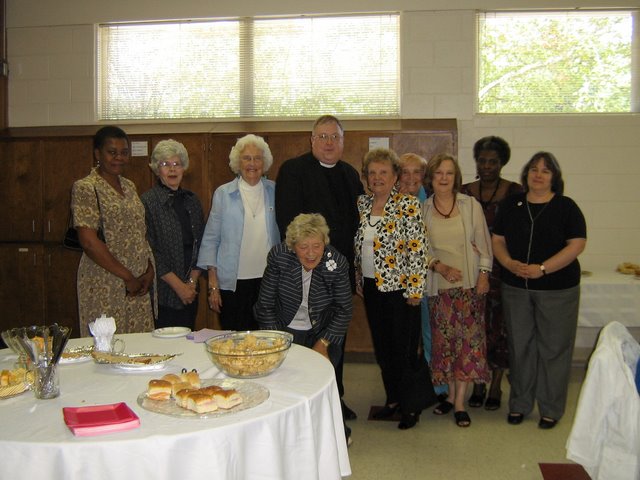
Pictured:  Some of the lay readers at the conclusion of the conference.


“Pilate therefore said unto him, Art thou a king then? Jesuscanswered, Thou sayest that I am a king. To this end was I born, and for this cause came I into the world, that I should bear witness unto the truth.”

-St. John 18:37

Today we honor Christ our King, and pledge Him our love and our obedience. Today we are invited to meditate on themeof Christ as our King and our Lord. The very name of this Feast of Christ the King tells out that we are His subjects, His people, His followers. That’s a bold claim and it challenges us to ask if we really are doing our best to be followers of the King, His sons and daughters. Let’s hold on to that thought.

We don’t like kings. Our nation exists out of a struggle to rid itself of a particularly difficult and arbitrary, and some would say barking mad, English king. We find kings at best quaint, figures of a bygone age. Maybe we look on them with nostalgia. I love this verse from Shakespeare,

“And nothing can we call our own but death
And that small model of the barren earth
Which serves as paste and cover to our bones.
For God’s sake, let us sit upon the ground
And tell sad stories of the death of kings.”

Or perhaps we hold them a bit a bit silly like that old comic strip entitled The Little King by a fellow named Otto Soglow which told its stories using images and very few words as a mostly pantomime with a rotund bearded
fellow as the vertically-challenged (that would be short)  king.

We don’t keep them in much esteem here in America. As Mark Twain said, “All kings is mostly rapscallions.”  And we’ve come a long way from James I of England who said, state of monarchy is the supremest thing upon earth: for kings are not only God’s Lieutenants upon earth, and sit upon God’s throne, but even by God himself they are called Gods. Makes you want to get out your musket, doesn’t it?

And so this morning we turn to our king—a king that doesn’t fit any of our popular images, or even those in the history books. Let’s look at a picture of our King—the King of Kings.

In the grey light of a morning, the desert cold just beginning to recede, it was humanlya most vulnerable and helpless hour for Jesus. He stood bruised and bound and bleeding. After a sleepless night during which He had been arrested and dragged from one place to another, roughly questioned by authorities, and now hw stands before the agent of a king, an emperor, actually. He stands before a Roman governor who represented the world-wide power of Rome. The governor asks the prisoner this most audacious question, “Are You a king?” On the surface it looks ridiculous. Here’s the dialogue of an earth shattering moment:

Pilate: “Are You a king?”

Jesus: “My kingdom is not of this world. If my kingdom were of this  world then my servants would be fighting, that I might not be delivered up to the Jews. But as it is, my kingdom is not of this realm.”

Pilate: “So you ARE a king?”

Jesus: “You say  I am a king. For this cause I have been born, and for this I have come into the world, to bear witness to the truth.  Everyone who is of the truth hears my voice.”

Pilate: “What IS ‘truth’?”

Jesus said to Pilate, and to all the world, that He came into the world– that He was BORN to reveal truth.  But how does thatremotely fit in to any notion of kingship?

On this October morning when we are called to think on who our leader-our real leader, our king, is. Close your eyes for a moment. Picture that scene of Jesus standing before Pilate in your minds’ eye. What do you see?

If we use a worldly mind-set we see weakness standing before power.  We see a victim standing before the representative of a dictator.  We see a martyr standing before false and wicked injustice.  We see one man with the power of life and death standing before another about to die. But, beloved in Christ, with the eyes of faith we see, we see that, yes, weakness IS standing before power– but the power is NOT with the Roman.  We see one Man with the life of the other in His command, but the one in danger of death is NOT the Man from Galilee.  How can this be?

Jesus the Christ told Pilate several things that morning. He said first, He IS  king!  Second, our Lord said that His kingdom is not derived from nor dependant upon earthly power either to establish or to maintain it. Third, Jesus said His is a kingdom of TRUTH. The King Himself IS the witness of TRUTH.

What sort of king is this, our king? Listen to the epistle reading from Colossians 1:13-30:

For He [God the Father] delivered us from the domain of darkness, and transferred us TO THE KINGDOM of His beloved Son, IN WHOM WE HAVE REDEMPTION, the forgiveness of sins.  AND HE IS THE IMAGE OF THE INVISIBLE GOD, the   first-born of all creation.  FOR BY HIM ALL THINGS WERE CREATED, both in the    heavens and on the earth, visible and invisible,  hether thrones or dominions or rulers or authorities–all things have been created by Him and for Him. AND HE IS BEFORE ALL THINGS, AND IN HIM ALL THINGS HOLD TOGETHER. HE IS ALSO THE HEAD OF THE BODY, the church; and He is the beginning, the first-born from the dead; so that He Himself might come to have first place in everything. For it was the Father’s good pleasure for all the fullness to dwell in Him, and through Him to reconcile  all things to Himself, having made peace through the blood of His cross; through Him, I say, whether things on earth, or things in heaven. (Colossians 1:1 -20)

Jesus’ majesty is veiled as He stands before Pilate. But the Jesus the Christ is God: He is eternal! All that the Scripturessay of Him as true in eternity, in the future, in the present– were true that day:
1. The image of the invisible God! Holy, loving, patient, pure.
2. The firstborn of all Creation.
3. By Him all things were created, both visible and invisible.
4. All things were created FOR Him.
5. The KING was prior to all things, co-eternal with God.
6. IN HIM ALL THINGS HOLD TOGETHER!
7. He is the Head of the church.
8. He is the firstborn from the dead
9. Through HIM all things are reconciled unto Himself, since He made peace through the blood of His cross, things on earth and in heaven.

What kind of king is this we hold to? If Jesus IS who the Bible claims Him to be, and He is. If He is King as HE HIMSELF said that day– then whom do you suppose was REALLY on trial the day Jesus was crucified? Pontius
Pilate, with all of the power of an emperor behind him, asked the wrong question that morning. He asked, “WHAT is truth?” He was looking at truth, just as we are facing the truth! He should have asked “WHO is Truth?”

But to this day we Christians–who have been baptized and catechized, who have the Scriptures in how many translations, who know the Beatitudes and the Ten Commandments and the Apostles’ Creed keep asking “WHAT?”!! We
confuse “truth” with our supposed  knowledge of the facts and our interpretations or what we sophisticated modern folks want to plug in to make ourselves comfortable. Too often we fail to see that we cannot know TRUTH apart from the
PERSON who IS truth and who REVEALS truth. And Pontius Pilate, for his part, actually pronounced a true verdict (“I find  NO fault in this Man!”). But, then, he rendered an utterly false and unjust sentence (“You take Him away and crucify Him…”)  Then, the Roman soldiers proceeded to play a game with this King.

The Roman garrison was adjacent to the Temple grounds.  In recent years the pavement has been uncovered in what was the ground floor of that fort. This pavement (Gabbatha)is marked with dimly carved figures, something like a giant chess or checkerboard.  On that checkerboard the common soldiers played a cruel game with the condemned Christ, Christ the King. They crowned Him with thorns and wrapped Him in an old robe and then they gave mocking bows along with all the abuse and resentment that they felt toward their own wicked masters.  But in their shameful ignorance that day they mocked the One Person who is the “glue of the Universe!,” the One who holds all Creation together by the power of His Word!  Jesus was on His way to “make peace through the blood of His cross,” and so “to reconcile all things to Himself!”  And these people did not have a clue!

And this horrifies us. WE would never treat the King that way!  But you know what? We do just that.  Think about it: To do anything less than to acknowledge Jesus as truly Sovereign in our lives is to make a mockery of His kingdom.  Unless we are submitted to Him in every part of our lives and living, then He is not truly the King of our lives.  There is a world of difference between the grace of faith and the arrogance of our human presumption.  To say that we are
Christian when we are not wholly submitted to the King is to take the place of Pilate and ask the question, “WHAT is truth?”,  when we know we should be saying to the One who is the Way and the Truth and the Life, “JESUS IS LORD!”

Our presumption mimics saving faith!  Faith and presumption may look similar. Presumption mimics faith’s confidence and assurance.  But the confidence presumption gives is false, and it will turn into terror before the appearance
of the Sovereign Lord, before Christ the King. To say that we are Christian and then to say that we shall decide for ourselves what is right and wrong, to decide how we will run our lives, to take ourselves into a life apart from divine revelation and apart from the Lordship of Jesus is to mock the King of Kings. We mock even as the soldiers put the purple robe on Him the day He was crucified.

Beloved, Jesus is the chief cornerstone of life for all the Universe!  He is the stone the builders rejected, but when we build on Him we “stand firm” and we “fit in” with all the truth of the Universe.  When we reject Him, He will have to deal with that., for He is King.

We are coming again full circle in the church year, and we sill shortly begin again with Advent.  This Sunday of the  year we call “Christ the King Sunday”  is a reminder that history is NOT simply going around in circles, but that because Christ IS King, one day the kingdoms of this world will become the kingdoms of our Lord, and of His Christ. The Lord Jesus Christ is NOT coming to vindicate OUR way of life, nor OUR interpretation of the content of “truth.”  “Jesus is LORD!”: and when He returns it will be HIS life that is vindicated, and HIS glory that will be revealed!

We are called to discernment NOW!  We are called to faith NOW! We stand with Pilate NOW– where it LOOKS as though we have the power to decide “What shall we do with Jesus?”

I know it seems like a sudden leap forward into the Advent story (and it doesn’t seem possible that Advent is fast approaching) , but we are called to the faith of Joseph, who couldn’t believe the kind of King who was coming, from the line of David the shepherd boy who became a great king.  Joseph had a hard time believing the angel who told him:  “Joseph, son of David, do not be afraid to take  Mary as your wife: for that  which has been conceived in her is of the Holy Spirit. “And she will bear a Son; and you shall call His name Jesus, for it is He who will save His people from their sins.” (Matthew 1: 20 – 21)

We keep looking for the spectacular, when instead Jesus stands before us in the everyday living of life, in all of our joys and in all of our sorrows, it seems as if HE is on trial for HIS life!  And we keep making life and death decisions for ourselves, when we have the TRUTH Himself ready and waiting to be our own CHRIST THE KING the king of glory who gives nothing other than eternal life!

So this day let us emblazon in our hearts and minds the words of the psalmist,

“Who is this King of glory? The LORD strong and mighty, the LORD mighty in battle. Lift up your heads, O ye gates; even lift them up, ye everlasting doors; and the King of glory shall come in. Who is this King of glory? The LORD of hosts, he is the King of glory.”

Hail, Christ our King. Amen.
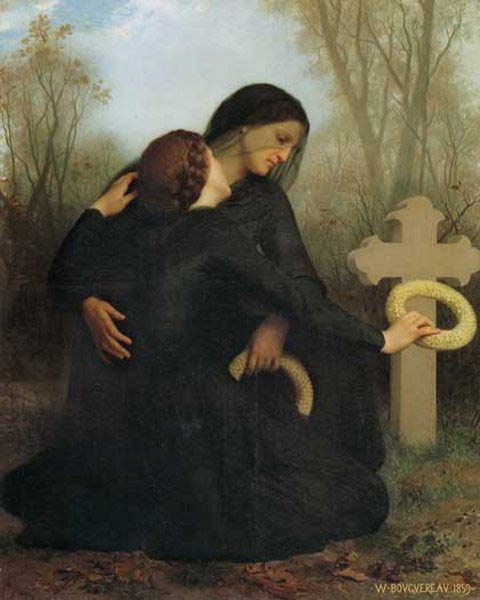


On Veterans’ Day we take a moment to honor all military veterans.  It is also celebrated as Armistice Day or Remembrance Day in other parts of the world, falling on November 11, the anniversary of the signing of the Armistice
that ended World War I.  Major hostilities of World War I were formally ended at the 11th hour of the 11th day of the 11th month of 1918 with the German signing of the Armistice.  President Woodrow Wilson, in his proclamation setting aside  Armistice Day on November 11, 1919 said:

To us in America, the reflections of Armistice Day will be filled with solemn pride in the heroism of those who died in the country’s service and with gratitude for the victory, both because of the thing from which it has freed us and because of the opportunity it has given America to show her sympathy with peace and justice in the councils of the nations.

As previously announced, on November 11, 2010, Saint Alban’s will mark Veterans’ Day with a Mass of Remembrance at 6:30 p.m.  Those wishing to have a veteran, living or dead, or a unit or ship remembered, should let the Rector or the parish office know by noon on September 10th to insure that their names appear on the Roll of Honor to be read during the service.  Parish members, active or retired, eligible to wear their uniforms are encouraged to do so. (If your uniform has “shrunk” over the years, medals or ribbons are appropriate.

We also are initiating a photographic wall on one of the boards near the parish hall.  All are encouraged to bring photos of their time in service, veterans, or active duty personnel for our standing intentions.  These will be placed in the parish, as well as on a webpage as our website is revamped. Please indicate the names of those in the pictures and indicate whether they are living or deceased so that appropriate prayers may be offered for them. Photos may be dropped off at the parish hall or mailed to the church, but do send only copies of your originals.

Blessings,

Canon Nalls


s


From all here at St. Albans our prayers, congratulations and best wishes to Fr. Michael Weaver on his institution as Rector of Church of the Ascension (ACC), Centreville, Virginia.


(Given at Saint Alban’s, Richmond, Virginia)

“My brethren, be strong in the Lord, and in the power of his might. Put on the whole armour of God, that ye may be able tostand against the wiles of the devil. For we wrestle not against fleshand blood, but against principalities, against powers, against the rulers of the darkness of this world, against spiritual wickedness in high places.”

In the military, the Army in particular, there is a tradition of giving a coin to people who deserve recognition, to special visitors, or to commemorate a particular event.  These coins-called challenge coins-usually have the name of the particular command or a commander and perhaps a little motto on them.  The longer one is in the military, generally the more of these things one amasses, and together with various mugs, glasses, ball caps, t-shirts and belt buckles make up the kind of memorabilia collection that is guaranteed to annoy one’s wife.

We chaplains are not immune from the tradition, and senior chaplains typically hand out a challenge coin with an actual message. On the one side there is a set of ancient armor, a helmet, breastplate grieves and a sword.  On the other there are the words, “Put on the full armor of God.” These little coins are meant remind those who in harm’s way of the only true protection from the only real death, the armor of the Holy Spirit, of Word and of Sacrament that ward against eternal death. And you know. the military metaphor has had a strong attraction for Christians for two millenia. In fact, these images were common throughout both Old Testament/Jewish apocalyptic literature and in in the New Testament. There is a frequent use of military images by Christian writers at this time also—For example, in 2 Corinthians (10:3-4) we hear that “…though we walk in the flesh,we do not war after the flesh: (For the weapons of our warfare are not carnal, but mighty through God to the pulling down of strong holds;).  Again, in I Thessalonians (5:8-10), “…let us, who are of the day, be sober, putting on the breastplate of faith and love; and for an helmet, the hope of salvation. For God hath not appointed us to wrath, but to obtain salvation by our Lord Jesus Christ.”

These images are woven into the fabric of Christian tradition.  In St. Jerome’s commentary on the passage we learn that From what we read of the Lord our Savior throughout the Scriptures, it is manifestly clear that the whole armor of Christ is the Savior himself. It is he whom we are asked to “put on.” It is one and the same thing to say “Put on the whole armor of God” and “Put on the Lord Jesus Christ.” Our belt is truth and our breastplate is righteousness. The Savior is also called both “truth” and “righteousness.” So no one can doubt that he himself is that very belt and breastplate. On this principle he is also to be understood as the“preparation of the gospel of peace.” He himself is the “shield of faith” and the “helmet of salvation.” He is the “sword of the Spirit,” because he is the Word of God, living and efficacious, the utterance of which is stronger than any helmet and sharp on both sides. (Epistle to the Ephesians 3.6.11.6)

And in music, we have stirring hymns–like Onward Christian Soldiers and Saint Patrick’s Breastplate that call the Church militant to battle against the forces of the prince of the world or invoke the strong protection of the Trinity in this struggle.  In one of the hymns I selected for my ordination–Stand Up, Stand Up for Jesus–we hear the stirring lyrics that echo today’s epistle passage:

Stand up, stand up for Jesus, Stand in His strength alone; The arm of flesh will fail you, Ye dare not trust your own. Put on the gospel armor, And watching unto prayer;
Where duty calls or danger, Be never wanting there.

This is a seemingly simple verse from a rousing hymn, but when we look to the Epistle, our task is a bit more complex as St. Paul emphasizes the combative nature of the Christian
encounter with this world.  Christians are strengthened by putting on the Gospel armor–the “whole armor” of God to protect and prepare them for their encounter with “the wiles of the devil” that
will assault them. The whole armor refers to the entire stock of protective apparatus available to soldiers going into combat — a wholeness that is necessary so that no unprotected surfaces are open to harm.
That Christians “stand” against these forces reasserts the simple foot-soldier image of the Christian — those who may expect to combat the enemy at close quarters, hand-to-hand and face-to-face.

This battle requires God’s strength because the opponents facing believers are not other human beings (“flesh and blood”) but “cosmic powers of this present darkness.”  While St. Paul offers
apocalyptic imagery, the battle that confronts Christians is in the here and now, the “present darkness” and not some distant future. And, it is a battle with a terrorist: a spiritual terrorist.
St. John Chrysostom wrote in his Homily on Ephesians that, “The enemy does not make war on us straightforwardly or openly but by his wiles. What are the devil’s wiles? They consist in trying to capture us by some shortcut and always by deceit…. The devil never openly lays temptation before us. He does not mention idolatry out loud. But by his stratagems he presents idolatrous
choices to us, by persuasive words and by employing clever euphemisms.”

This kind of warfare is akin to dealing with a terrorist—in this case a genuine master of terror who makes use of a bomb-maker. The bomb-maker frequently conceals the deadly within the familiar or
even welcome things of life-a child’s stuffed toy or in an innocent looking Christmas package. The target of destruction welcomes it, brings it inside and it explodes with devastating effect–maiming and killing.
Yet, unlike suicide bombers and other assorted folk who make up terrorist cells, the encounter St. Paul describes is not with human beings.  Even the world rulers mentioned in the passage should be understood in slightly Gnostic terms as dark spirits who have made both this world and the “heavenly places” potential regions for their dominion. And aren’t we familiar with this type of ruler these days?

Having revealed the frighteningly powerful forces that oppose the faithful, the St. Paul urges us to take full advantage of the protection God offers, the “armor” that is our only hope to withstand that “evil day” which, signifies the time in which we live. St. Paul then begins the next section of exhortations with more military language, encouraging the Christian “soldier” to “stand”–to stand up as a Christian and for Christ against the enemy. Again, in the words of St. John Chrysostom, every Christian home is a bit like a military encampment, and God stands ready to provide His armor to those within.

For we are able to stand only by wearing this promised armor–spiritual armor– that Godprovides. As we have noted, the items St. Paul describes are all part of a standard armored soldier’s wardrobe, and each piece protects and prepares the soldier for combat in a particular way. Let’s take a closer look. The firsttask in battle is to learn how to stand firmly, and the “belt” or “girdle” of truth plays a dual function. First, its complete encircling of the faithful supports the Christian wholly, leaving no part unprotected. Second, the soldier’s belt was also a place to store other weapons, showing that the truth of God’s love through Christ also provides Christians with a grounding for other convictions — salvation, deliverance, inheritance.

Next, the “breastplate” of the soldier protects the most vital and vulnerable places, i.e., the throat, heart and lungs–we see them in modern infantry in the ubiquitous flack jacket. God;s righteousness functions similarly for Christians confronting evil. Without the unyielding righteousness of God, we, too, wouldnever be free from the threat of some mortal blow. God’s protective righteousness is also described in the book of the prophet Isaiah (11:4-5 and 59:17) with the same type of military image and offering the same symbolic shielding.  But, as we hear from St. Paul, righteousness is not as strong as faith, because righteousness lives by faith.  What are those words from the Mass–we do not come to Thy table trusting in our own righteousness?  So the breastplate is not bulletproof, it must be linked to another part of our armor–faith.

The “shoes” with which believers must be shod are surprisingly less clearly defined than the other armored accoutrements. Traditionally soldiers wore sturdy sandals or even boots that had nails driven through the soles. These could then act as cleats, helping the battling soldier to “dig in” effectively against an opponent. But St. Paul doesn’t specify a particular style of shoes; instead, he leaves open the question of what “will make you ready to proclaim the gospel of peace.”  St. Jerome describes our footwear as something that enables us to prepare us to walk, to press on to our goal in Christ.

The mention of “peace” in the midst of martial images startling–“your feet shod with the preparation of the gospel of peace.”  It highlights the radicaldifference between the gospel Jesus offers and the violent discord the “spiritual forces of evil” pour out upon the world. For those “in Christ,” however, no matter how much chaos swirls about them, they can stand firm within a calming peace — for Christ is our peace and our stability on an often shifting battlefield (Ephesians 2:14).

However vague St. Paulmight be about the foot covering, the description of the “shield of faith” is quite detailed. The image of the Epistle refers to the ancient tradition of taking the heavy wood, cloth and
hide-covered shields of the front-line soldiers and dipping them into water just before the battle. The shield soaked up this water and retained its wetness for quite some time. In this way when the enemy rained down flaming, pitch-covered arrows on the advancing troops, the arrows that embedded themselves in the wet shields harmlessly went out, instead of engulfing the shield and its soldier in flames.

The shield of faith carries all of the capital virtues and brings them tofulfillment.  Unless we are armed with this shield we simply won’t have the strength to battle courageously and to resist all of the deadly powers.  Those fiery darts of temptation and perverse desires are extinguished on the shield of faith.  For if faith is capable of commanding hosts of demons, how much more is it capable of ordering the passions of our souls.

The “helmet of salvation” is another military image borrowed from Isaiah (59:17). But what is part of God’s own armament against injustice and evil is now given over to protect those standing faithfully in the fight. By being given God’s own “helmet,” St. Paul demonstrates just how directly and personally our salvation comes from God.  In the words of Jerome, because of this helmet, the senses of our head remain intact–for if Christ our salvation is at our head, we won’t lose it.

The final piece of equipment itemized here is the only potentially offensive weapon– the “sword of the Spirit, which is the word of God.” Note that though the Spirit is mentioned, the Spirit itself is not a sword, but the Spirit works through the word of God. It is the Spirit’s vitality and strength which lends the sharp cutting edge to the sword which every believer can wield: God’s holy word. It allows us to cut away at the sins that beset us and focus on the true prize, Jesus Christ.

But Christians have yet another piece of armament on which they may rely, anotherpositive power that gives that extra added protection — prayer. The “war” Ephesians envisions is fought with both the power of prayer and the sword-like word of God. The final exhortation to pray may initially seem like an unusual demand in the midst of all this military imagery, but for St. Paul it is a major weapon in the Christian’s arsenal. Verses 18-20 outline how this state of constant prayer is to be attained — we must “keep alert” and “persevere.”

Constant prayer was greatly emphasized in the early church community — and it is surely  commended to us in these times–for it is only by remaining in a state of constant contact with God that we may feel assured that God’s protective presence remained near at hand. By persevering in prayer “for all the saints” — that is, for all those who are members of the body of Christ — the bond between individual Christians is strengthened and tightened and the armor of God protects all. So, we are armed to our utmost protection and, in the words of the hymn, we are watching unto prayer. What remains?  Only to call upon our King and urge Him to extend His hand that like St. Paul we may be ambassadors, of Christ, open our mouths boldly, and make known the mystery of the Gospel.  Amen.

-The Very Reverend Canon Charles H. Nalls


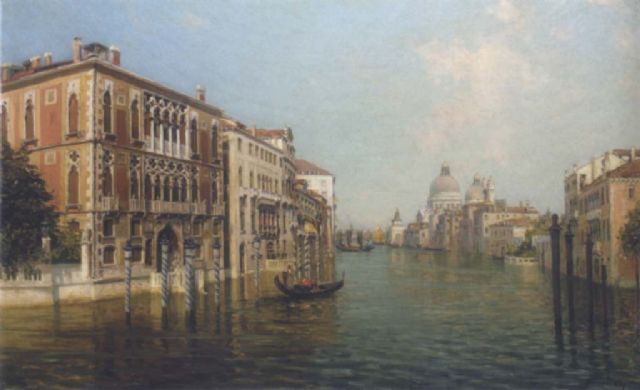
Please join us at Saint Alban’s for An Evening of Food, Art and Entertainment,  Saturday, October 23rd, 6-8:30 pm in Smith Hall.  Preview paintings and other objects that will be auctioned at Twelfth Night, enjoy heavy hors d’oeuvres and musical entertainment, as well as a silent auction.  Paintings from the family of Ralph Waldo Emerson will highlight the catalogue, along with 19th century landscapes attributed to Bernardo Hay, 20th century oils by Anthony Klitz, Robert Allen Gough, and a signed seriograph by band leader Xavier Cugat. The cost is a suggested donation of $25 per person, $30 per couple. Enjoy an evening out and support St. Albans.
The Grand Canal, Venice

A Typical Work by Bernardo Hay

Those Who Serve


Altar Guild Recognition Sunday

St. Alban’s recently recognized the members of its Altar Guild–those who quietly serve Christ in the preparation of His altar for the various Masses and services held here at the Pro-Cathedral.  Please pray for them as they undertake this holy work.

O Lord Jesus Christ, who didst accept the ministry of faithful women during your earthly life;   We pray you to accept and bless the work that this altar guild undertakes in the care of your sanctuary.   Grant us a spirit of reverence for your house and worship, your Word and Sacraments, and preserve in purity and holiness our own souls and bodies as living temples of Your presence.
Amen.


Topic: Sin Will Find Us Out

Covering up sin leads to severe consequences.

Read: Joshua 7

Who remembers Ai? Because of one man’s hidden sin, the Israelites were defeated in battle. In this session we will see that all humans are sinners, but our
sins don’t have to be fatal. Through Christ’s work on the Cross and confession of sin, we can find forgiveness.

An English Lady


Today marks the Feast of Our Lady of Walsingham, the commoration of the apparition of Mary in a vision to Richeldis de Faverches, a devout Saxon noblewoman, in 1061 in the village of Walsingham in Norfolk, England. Lady Richeldis had a Holy House built in Walsingham which has become a shrine and place of pilgrimage to Anglicans and Roman Catholics alike.

Magnificat. St. Luke i. 46.
My soul doth magnify the Lord, * and my
spirit hath rejoiced in God my Saviour.
For he hath regarded * the
lowliness of his handmaiden.
For behold, from henceforth * all
generations shall call me blessed.
For he that is mighty hath magnified
me; * and holy is his Name.
And his mercy is on them that fear him *
throughout all generations.
He hath showed strength with his arm; * he
hath scattered the proud in the imagination of their hearts.
He hath put down the mighty from their seat, * and hath exalted the humble and meek.
He hath filled the hungry with good things; * and the rich he hath sent empty away.
He remembering his mercy hath holpen his servant Israel; * as he promised to our forefathers, Abraham and his seed, for ever.

Glory be to the Father and to the Son and to the Holy Ghost, as it was in the beginning is now and ever shall be world without end, Amen.